
Brain metastases
Gamma Knife may be used for one or more limited-size metastases, the post-operative surgical cavity, alone or together with other cancer treatments.
Patient information
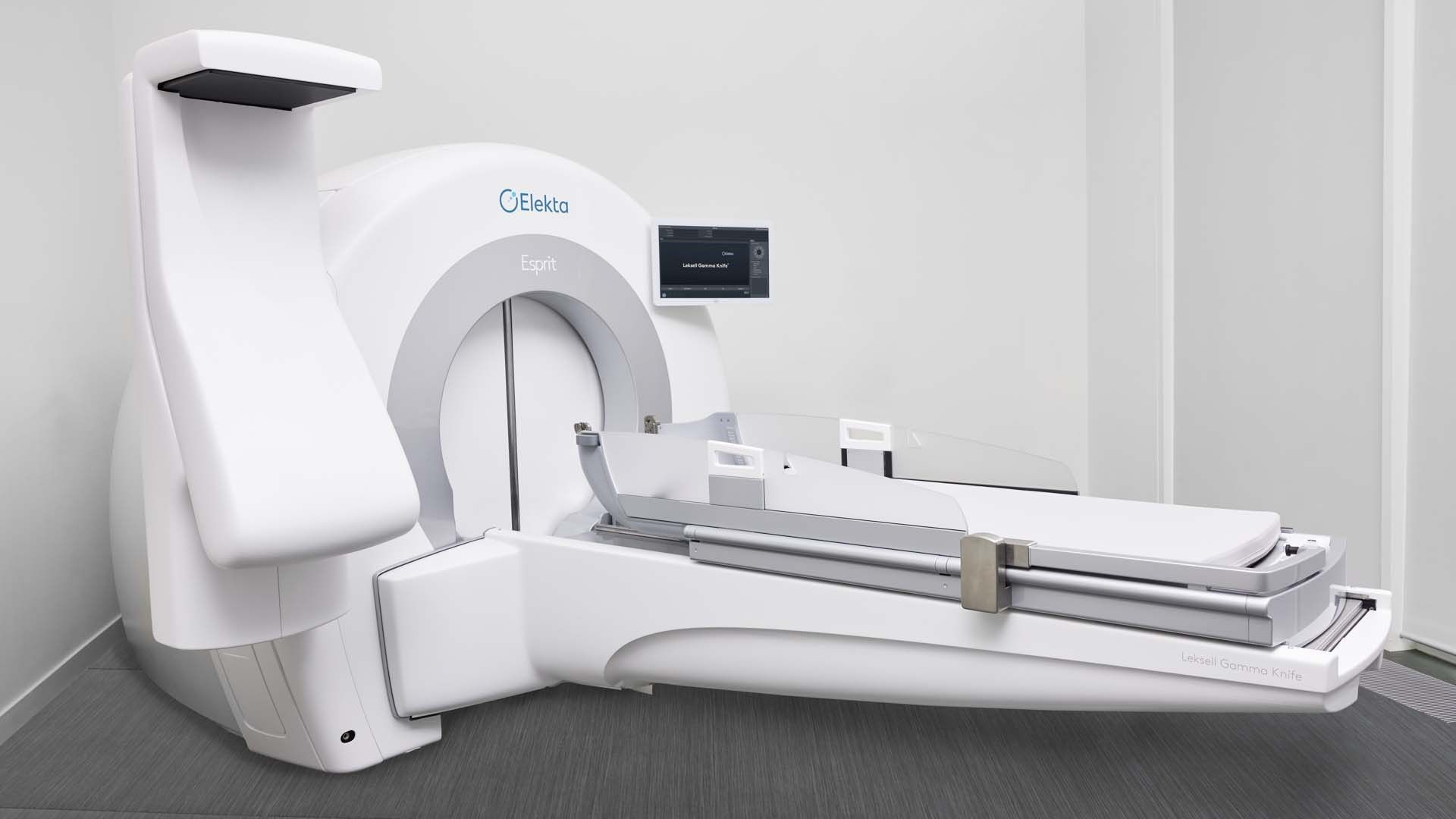
Despite the word “knife” in its name, Gamma Knife is not conventional surgery. The skull is not opened, and no surgical incision or sutures are required. Numerous fine gamma-ray beams approach from different directions and converge at the intended target. This makes it possible to deliver an effective radiation dose to the target while preserving surrounding healthy brain tissue as far as possible.
The aim depends on the condition: to stop tumor growth or achieve shrinkage, help an arteriovenous malformation (AVM) close over time, or modulate the relevant neural circuit in functional conditions such as trigeminal neuralgia or tremor.

Two methods can be used to keep the head still during treatment:
Stereotactic frame: The frame is fixed to the head under local anesthesia and is most often used for single-session treatment. It is removed on the same day after treatment is completed.
Custom thermoplastic mask: The mask allows treatment without attaching a frame to the head. It can permit treatment to be divided into several sessions, especially for larger targets or lesions close to sensitive structures such as the optic nerves or brainstem.
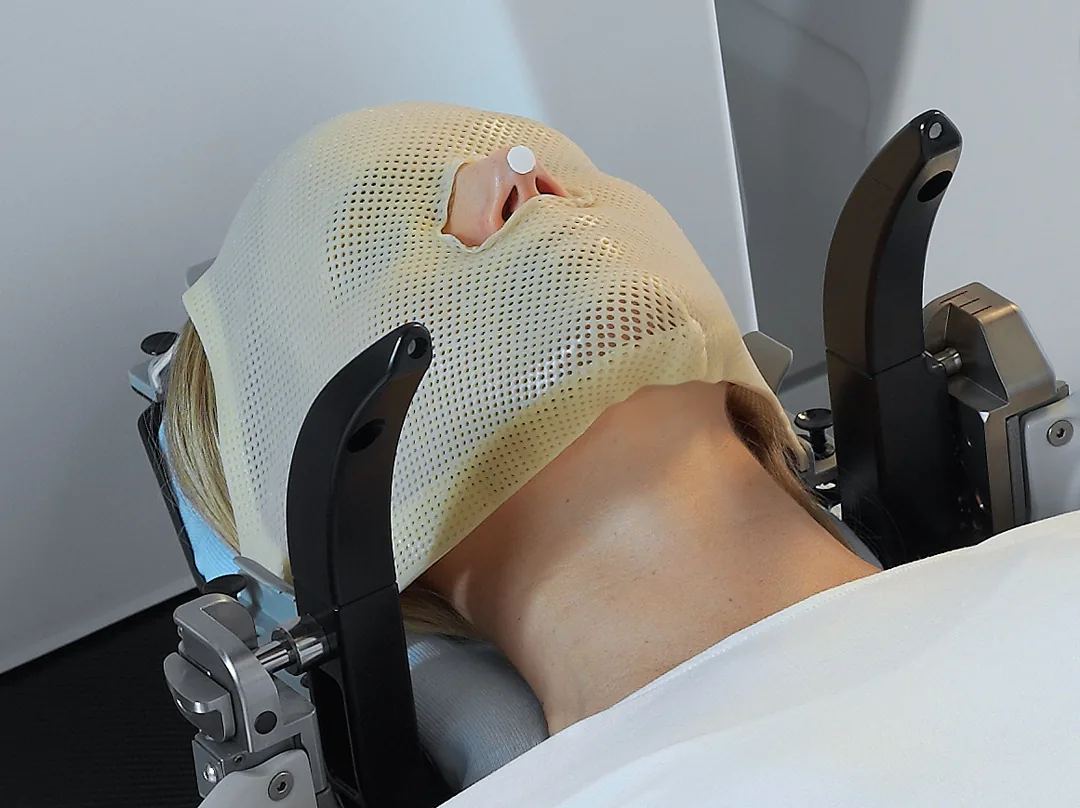
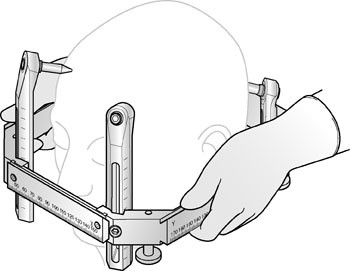
With mask-based treatment, the patient’s position is verified by the imaging system at every session. Head movement is continuously monitored during treatment; radiation delivery stops automatically if movement exceeds the safety threshold.
The choice between a frame and a mask is not based on patient preference alone. The condition, target size, location and required precision are considered together.
Gamma Knife does not replace surgery in every situation. Open surgery may be more appropriate for large masses causing pressure, urgent surgical situations, or when tissue diagnosis is required.
Gamma Knife is not selected based on a diagnosis alone. The size and location of the lesion, surrounding swelling, the patient’s age and general health, and previous treatments are considered together.
Gamma Knife may be used for one or more limited-size metastases, the post-operative surgical cavity, alone or together with other cancer treatments.
It may be considered particularly for selected small to medium-sized, growing, skull-base, residual or recurrent meningiomas.
It may help control tumor growth while preserving facial nerve, hearing and balance function as far as possible.
It may be used for selected residual or recurrent adenomas, certain hormone-secreting adenomas, or adenomas that are not suitable for surgery.
It may be used for selected cranial nerve tumors, glomus tumors and skull-base tumors.
Gamma Knife is used particularly for small to medium-sized AVMs or AVMs that carry a high surgical risk. Closure usually develops over several years.
In patients who do not obtain sufficient benefit from medication or are not suitable for surgery, a specific part of the trigeminal nerve may be targeted.
It may be considered for selected patients with treatment-resistant tremor who are not suitable for deep brain stimulation or open surgery.
After multidisciplinary assessment, Gamma Knife may be used for recurrent primary brain tumors, some dural arteriovenous fistulas and highly selected functional conditions.